
Over the years, I’ve worked on both sides of transactions, advising companies, evaluating businesses as an investor, and working directly with owner-led and family-owned companies. That perspective has shaped how I think about what it really takes to prepare to sell a business and what often surprises owners when they begin considering an exit.
One of the most common misconceptions is that selling a business is mostly about finding a buyer and agreeing on a price. In reality, preparing to sell a business usually starts much earlier. It involves improving the quality of your financial information, understanding how buyers evaluate risk, reducing owner dependence, and building a process that gives you real options.
For many owners, selling a company is not just a financial event. It is a major personal transition tied to years, and sometimes decades, of work, responsibility, and identity. That’s one reason preparation matters so much. The better prepared a business is, the more options an owner tends to have and the more likely they are to reach an outcome that feels right both financially and personally.
How to prepare to sell a business before going to market
A lot of privately held business owners have never sold a company before. Some have never been through any formal M&A process at all. That is not a criticism. It’s just reality.
If you’ve spent your career building and operating a business, you may not have had any reason to learn what buyers expect, what diligence looks like, or how a deal process typically unfolds. That lack of familiarity can create blind spots early on.
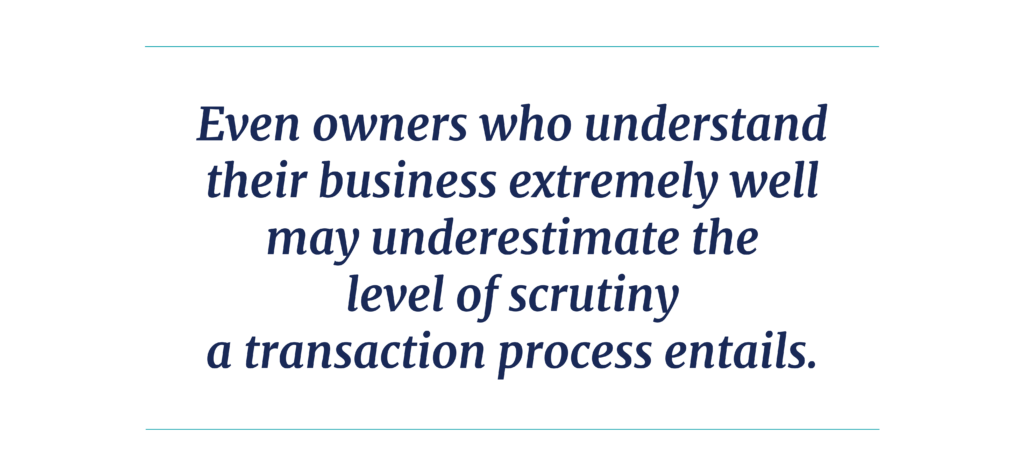
In my experience, many owners don’t realize how much work goes into preparing a business for sale, managing buyer conversations, responding to diligence, and navigating negotiations as they evolve. Even owners who understand their business extremely well may underestimate the level of scrutiny a transaction process entails.
That’s one reason I believe education is such an important part of the advisor’s role. Before an owner can decide whether now is the right time to sell, they need a realistic understanding of the process itself and what buyers are likely to focus on.
What buyers look for beyond revenue and EBITDA
Business owners often assume buyers will look primarily at revenue, EBITDA, and growth trends. Of course those matter, but buyers are evaluating much more than financial performance alone.
They’re also assessing how organized the company is, how clearly it presents information, how reliable the reporting is, and how easy it is to understand the business. If the financial statements are disorganized, if the reporting is inconsistent, or if key information is hard to produce, buyers tend to interpret that as risk.
That doesn’t necessarily mean the company is weak. But it can create the impression that the business is less disciplined, less scalable, or less prepared than it should be. In a sale process, perception matters.
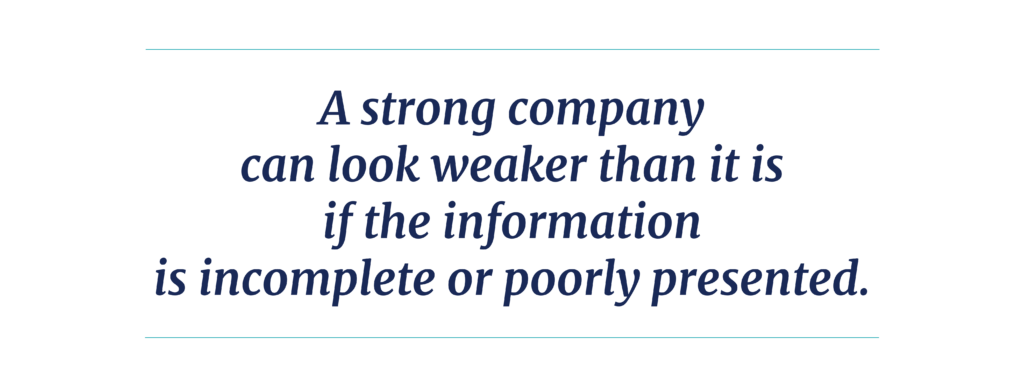
This is one reason you cannot treat business sale preparation as a last-minute exercise. Owners need to think not just about how the business is performing, but also about how someone looking in from the outside will understand it. A strong company can look weaker than it is if the information is incomplete or poorly presented. A well-prepared company gives buyers more confidence and usually creates a more efficient process.
Why not all buyers are the same
Another common misunderstanding is the idea that all buyers are alike. That’s rarely the case.
There are strategic buyers, private equity-backed buyers, independent sponsors, family offices, individual buyers, and others. They can differ widely in how they evaluate a business, how quickly they move, how they structure deals, how transparent they are during the process, and what they care about after closing.
Some buyers are a strong cultural fit. Some are not. Some know how to navigate a process efficiently and professionally. Some create unnecessary friction. Some are fully prepared to close. Others are much less certain than they appear at the outset.
That’s why a good outcome is not just about finding the highest price. It’s about finding the right buyer at the right price, with terms and a structure that make sense for the seller’s goals.
In my experience, owners care deeply about what happens to employees, customers, and the legacy of the business after closing. In those situations, the highest bidder is not automatically the best choice. Fit matters. Certainty matters. The buyer’s credibility matters.
How a poorly run sale process can shift leverage
One of the risks I often see when owners try to run a sale process on their own is that they don’t realize how quickly leverage can change.
A company may find one interested buyer, negotiate a promising deal, and assume things are on track. But if there’s only one buyer in the process and no alternative path, that buyer may gain leverage over time, especially if issues arise late in diligence or if the seller becomes emotionally committed to getting the deal done.
That’s when retrading can happen. Terms change. Timelines stretch. Confidence weakens. And the seller may feel stuck because they’ve already invested so much time and energy.
A broader, well-run process does not guarantee a perfect result, but it usually creates more options and better leverage. It gives the seller the ability to compare buyers, evaluate fit, and keep the process moving if one party falls away or changes direction.
I recently spoke with a company that had tried to sell on its own. They negotiated directly with a buyer and thought they had a good transaction in place. But because they had only one buyer and no backup options, they were exposed when that buyer started getting cold feet and trying to change the terms.
Situations like that happen more often than people realize. Even when the initial offer looks attractive, a process without competition or alternatives can leave a seller vulnerable at exactly the wrong moment.
Why preparation should start earlier than most owners think
If I could give one piece of advice to a business owner who thinks they may want to sell in the next few years, it would be simple: start preparing now.
Preparation often creates more value than trying to time the market. It gives owners time to improve reporting, strengthen operations, address legal or accounting issues, reduce risk, and build a more transferable business. It also gives them more flexibility. Owners who prepare early are in a better position to move when the time is right rather than when circumstances force a decision.
The encouraging part is that most of the things that make a company more sellable also make it a better business in the meantime. Better financial visibility helps management make better decisions. Stronger contracts reduce uncertainty. Better systems improve efficiency. More management depth reduces dependence on the owner and creates a healthier operating model.
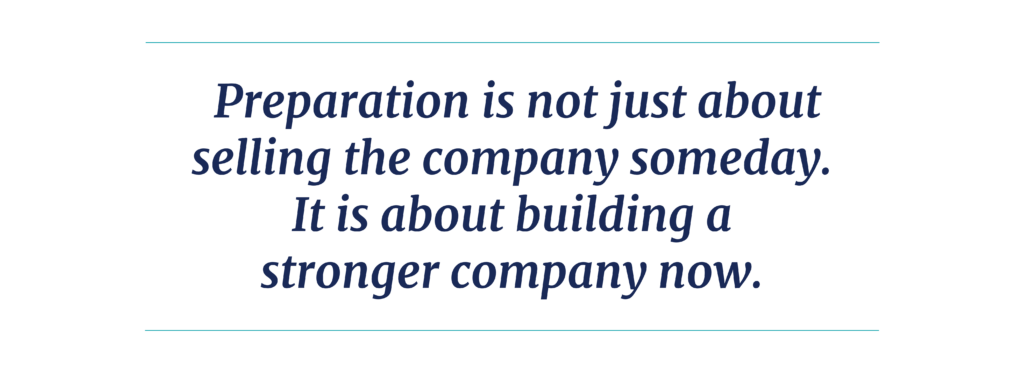
In other words, preparation is not just about selling the company someday. It is about building a stronger company now.
Two ways to improve business sale readiness
The specifics vary by business, but there are two areas where I often see meaningful opportunities for owners to improve sellability and reduce buyer concerns.
Stronger financial infrastructure
In many smaller companies, the owner is still heavily involved in the books and records while also trying to run the business. At a certain point, that becomes a limitation.
Bringing in the right financial support, whether that’s a bookkeeper, controller, or CFO, depending on the size and complexity of the business, can make a major difference. Better financial infrastructure improves reporting, supports growth, and helps the company produce the kind of information buyers expect to see.
It also frees the owner to focus more on strategy, growth, and leadership, rather than carrying every responsibility personally.
Reduced owner dependence
This is one of the most important issues in lower-middle-market transactions.
Many businesses are highly dependent on the owner. Key customer relationships may hinge on them. Operational know-how may sit with them. Sales may depend on them. Decision-making may run entirely through them.
That’s understandable in many founder-led companies, but it can create real challenges in a sale process. Buyers are typically more interested in a business that can operate and grow beyond the owner than one where everything lives in one person’s head.
That’s why building a stronger team matters. Hiring salespeople, operational leaders, and finance talent can help disperse responsibilities and create a more durable organization. The goal is not to remove the founder’s importance overnight. It’s to build a business that’s more transferable, more scalable, and less risky from a buyer’s perspective.
Why the best outcome is about more than price
Many owners begin thinking about a sale by asking what their business is worth. That’s a reasonable place to start, but it should not be the only question.
A successful outcome also depends on deal structure, certainty of close, post-close transition expectations, cultural fit, and confidence that the buyer will follow through in the way they say they will. Owners care deeply about their employees and want to feel confident they’re handing the business to the right next steward.
That’s one reason a thoughtful process matters so much. A well-run sale is not just about maximizing price. It’s about helping the owner understand their options, prepare properly, evaluate buyers carefully, and make a decision they can feel good about when the transaction is complete.
Final thought
Business owners do not need to have every answer years in advance of a sale. But they do benefit from starting the conversation earlier than they think they need to.
The owners who are best positioned for a strong outcome are usually the ones who take time to prepare, invest in the business before the sale process, and understand that selling a company is both a financial decision and a personal one.
The earlier you begin thinking about those issues, the more options you tend to create for yourself later. Ready to start the conversation? Reach out to our team today.